Top Venture Investors in Semiconductors Industry
Discover leading VC and CVC investors specializing in Semiconductors. Find your ideal investor match and connect with the right funding partners on Unicorn Nest.
Intro
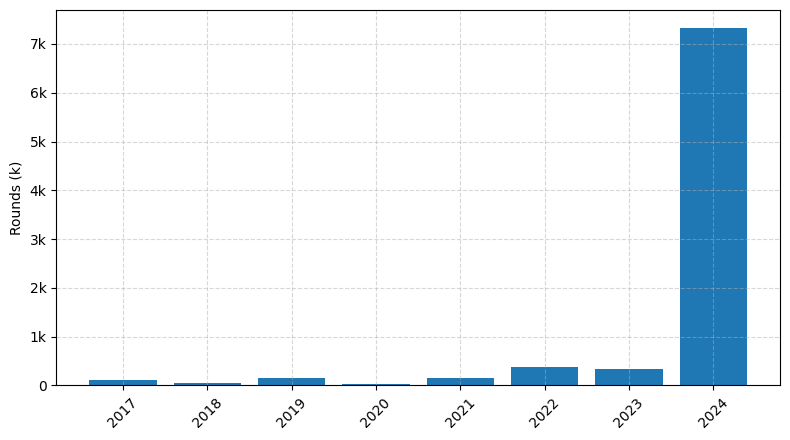
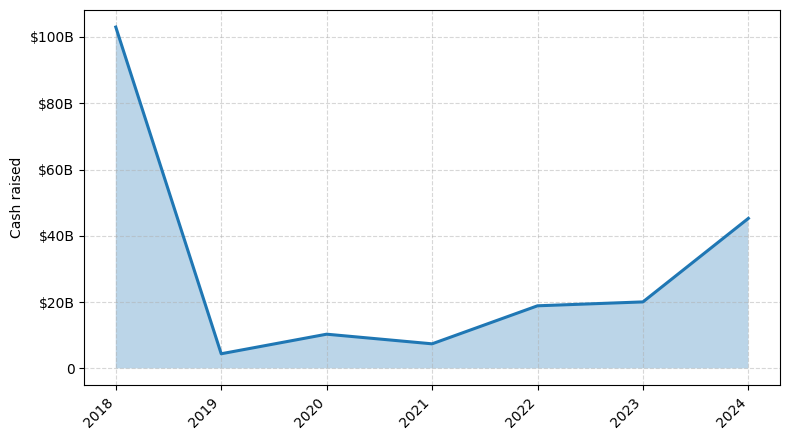
The semiconductor industry has been a hotbed of investment activity in the past three years, with a surge of capital flowing into this critical sector. Since 2022, the semiconductor industry has witnessed a significant increase in investment, with numerous deals and funding rounds taking place. In the last three years, the semiconductor industry has seen over 500 investments, totaling more than $100 billion in funding.
Some of the core startups that have received substantial investments include Graphcore, a UK-based AI chip company that raised $222 million in 2021, and Cerebras Systems, a California-based startup that specializes in AI-focused chips, which secured $250 million in 2022. Additionally, one of the most expensive deals in the semiconductor space was Intel's acquisition of Mobileye, a leading provider of autonomous driving technology, for a staggering $15.3 billion in 2022.
The semiconductor industry's investment landscape has been dynamic, with a mix of established players and innovative startups attracting significant funding. As the world becomes increasingly reliant on technology, the demand for advanced semiconductor solutions continues to grow, making this sector a prime target for investors seeking to capitalize on the industry's promising future.
Some of the core startups that have received substantial investments include Graphcore, a UK-based AI chip company that raised $222 million in 2021, and Cerebras Systems, a California-based startup that specializes in AI-focused chips, which secured $250 million in 2022. Additionally, one of the most expensive deals in the semiconductor space was Intel's acquisition of Mobileye, a leading provider of autonomous driving technology, for a staggering $15.3 billion in 2022.
The semiconductor industry's investment landscape has been dynamic, with a mix of established players and innovative startups attracting significant funding. As the world becomes increasingly reliant on technology, the demand for advanced semiconductor solutions continues to grow, making this sector a prime target for investors seeking to capitalize on the industry's promising future.
98 active VC investors in Semiconductors
In the semiconductor industry, venture capital firms have been actively investing in innovative startups. Key players include Sequoia Capital, Andreessen Horowitz, and Softbank Vision Fund, which have backed companies like Graphcore, a UK-based AI chip startup that raised $222 million in a Series D round in 2020. Another notable example is Cerebras Systems, a California-based AI hardware company, which secured a $250 million Series E funding in 2021, one of the largest venture capital rounds in the semiconductor sector in recent years. These investments highlight the growing interest and confidence in the semiconductor industry's potential for disruptive technologies and solutions.
| Fund | Location | Industry focus | Geo required | Rounds | Fund size |
|---|---|---|---|---|---|
| ZhenFund |  Beijing Beijing | Semiconductors | United States; Canada; Cambodia; Indonesia; Laos; Malaysia; Philippines; Singapore; Thailand; Vietnam; China; India; Japan; South Korea; Taiwan; Australia; New Zealand | Seed, Series A | |
| Yingke Capital | Fuzhou | life science, dual-carbon technology, hardcore technology, chip semiconductor, integrated circuit, new materials, high-end manufacturing | |||
| XT Hi-Tech |  Tel Aviv-Yafo Tel Aviv-Yafo | Semiconductors | Israel; United States | Generalist, Pre-Seed, Seed, Series A, Series B, Series C | |
| Celesta Capital |  San Francisco San Francisco | 5g, ai/ml, aerospace, agritech, automotive, cleantech, construction tech, consumer electronics, data infrastructure, data storage, edtech, edge computing, enterprise solutions, fintech, foodtech, healthtech, imaging, iot, life sciences, materials, medtech, networking, realtech, retailtech, robotics, security, semiconductors, software, deep tech | United States, California, Silicon Valley | Series A, Series B | |
| Woori Venture Partners |  Seoul Seoul | consumer service, medical, healthcare, education, digital media, entertainment, internet, mobile, entertainment, contents, mobility, chemical, manufacture, semiconductor, bio, healthcare, consumer, service, ict platform, service, metaverse, software | |||
| Walden International | San Francisco | enterprise, consumer, media, semiconductors, ecommerce, hardware, future of work, cloud, telecommunications, manufacturing | Generalist | Series D, Series A, Series E, Series F, Series B, Series C, Seed | |
| VI Partners |  Altendorf Altendorf | healthcare, scientific, technological challenges | Albania; Austria; Belgium; Bosnia and Herzegovina; Bulgaria; Croatia; Cyprus; Czechia; Denmark; Estonia; Finland; France; Germany; Greece; Hungary; Iceland; Ireland; Italy; Latvia; Liechtenstein; Lithuania; Luxembourg; Malta; Moldova; Monaco; Montenegro; Netherlands; North Macedonia; Norway; Poland; Portugal; Romania; San Marino; Serbia; Slovakia; Slovenia; Spain; Sweden; Switzerland; Turkey; Ukraine; United Kingdom | Seed, Series A | |
| Vesna deep tech |  Luxembourg Luxembourg | energytech, biotech, water & marine, circular economies, agritech, smart cities, touristtech, mobility & transportation, waste management, hydrogen, supply chains, polymers, biomaterials, smart materials, nanotech, semiconductors, life sciences, spacetech, big data, robotics, additive manufacturing, industrialtech, end-use applied ai, edge ai, defi / fintech ai, machine learning, natural language processing, ict powered life sciences, iot, augmented reality, quantum computing, cyber security | Croatia; Slovenia | EUR 50M | |
| Vertex Venture Holdings |  Singapore Singapore | healthcare, biotech, commerce, consumertech, cybersecurity, deep tech, developer tools, enterprise, enterprise tech, fintech, hr tech, healthtech, media, communication, medtech, sustainability, vertical saas, ai, ml, climate tech, defense, genai, impact, learning, development, semiconductors | China; Israel; India; Cambodia; Indonesia; Laos; Malaysia; Philippines; Singapore; Thailand; Vietnam; United States; Japan | Series E, Series C, Series D, Series A, Series B | |
| VentureTech Alliance | San Jose | semiconductor | United States |
14 active CVC investors in Semiconductors
Active corporate venture capital (CVC) firms have been investing heavily in the semiconductor industry over the past three years. Notable players include Intel Capital, which backed AI chip startup Habana Labs, and Qualcomm Ventures, which invested in IoT semiconductor firm Wiliot. These CVC firms are driving innovation in the sector.
| Fund | Location | Industry focus | Geo required | Rounds | Fund size |
|---|---|---|---|---|---|
| XT Hi-Tech | Tel Aviv-Yafo | Semiconductors | Israel; United States | Generalist, Pre-Seed, Seed, Series A, Series B, Series C | |
| UMC Capital |  Taipei Taipei | semiconductors, deep tech | United, States; China; Taiwan | ||
| SK Telecom Ventures | Santa Clara | mobile platforms, infrastructures, semiconductors, enterprise solutions, communications, cloud, it, data center, iot , sensors, emerging tech | Generalist | ||
| Scania Growth Capital |  Sodertalje Sodertalje | mobility, transport | Germany; Canada; Sweden; United Kingdom | Seed, Series A, Series B, Series C, Series D, Series E | EUR 183500000 |
| Samsung Ventures | Seoul | semiconductors, telecommunication, software, internet, bio engineering and medical industry | Generalist | Generalist, Seed, Pre-IPO | |
| Samsung Venture Investment | Seoul | semiconductors, telecommunication, software, internet, bio engineering, medical industry, ai, machine learning, automotive electronics, cleantech, bio, digital health, construction technology, display, enterprise, etc, fof, materials, mfg eng, network, 5g | |||
| Robert Bosch Venture Capital |  Gerlingen Gerlingen | ai, deep learning, automation, digitalization, semiconductor, next generation computer, ar / vr, mobility solutions, automation, electrification, sensors, mems devices, robotics, autonomous systems, enabling technologies, connectivity, signal processing and interpretation, human-machine-interface, modern software technologies, web/internet-based business models, climate tech, energy harvesting, distribution and storage, energy efficiency, healthcare, diagnostics and treatment, e-health devices, sensors | Generalist | Seed | USD 295000000 |
| Bosch Ventures | Gerlingen | deep-tech, ai / deep learning, automation & digitalization, semiconductor & next, generation computer, ar / vr, mobility solutions, electronics & power electronics, sensors, actuators, and mems devices, electric systems, incl. robotics, autonomous systems, connectivity, signal processing and interpretation, human-machine-interface (hmi), modern software technologies, web/internet based business models, climate tech, lab and point of care patient diagnostics, chronic diseases management with focus on pulmonary conditions, cancer diagnostics and treatment progress, e-health devices, sensors, applications and services | Generalist | USD 295000000 | |
| Red Cedar Ventures | East Lansing | advanced manufacturing, materials, agriculture technology, analytics, big data, business services, cleantech, energy, consumer goods, cybersecurity, fintech, healthcare information technology, internet of things, mobility, semiconductors, electronics | United States, Michigan | Series B, Series A, Seed, Pre-Seed | |
| Lam Capital | semiconductor subsystems, ai chips, industry 4.0, industrial automation |
Investments by year: Round
Investments by year: Cash raised
How is fundraising in Semiconductors different from other VC fundraising
Fundraising for semiconductor startups differs significantly from general startup fundraising. The semiconductor industry is capital-intensive, requiring substantial upfront investments in research, development, and manufacturing infrastructure. Startups in this sector often need to raise larger sums of money compared to software-based startups. Additionally, the development timelines for semiconductor products are typically longer, with a more extended path to commercialization. Investors in the semiconductor space tend to have a higher risk tolerance and a longer investment horizon. Furthermore, regulatory and compliance requirements, such as obtaining necessary certifications and navigating complex supply chains, add unique challenges for semiconductor startups seeking funding. Navigating these industry-specific hurdles requires specialized expertise and a deep understanding of the semiconductor ecosystem, making the fundraising process more complex than in other startup sectors.
Top Funded Semiconductors Startups
1. Nvidia Corporation: Approximately $70 billion in funding, focused on graphics processing units (GPUs) and artificial intelligence (AI) accelerators.
2. Arm Holdings: Approximately $6.5 billion in funding, specializing in processor architecture and chip design.
3. Cerebras Systems: Approximately $450 million in funding, developing large-scale AI-focused semiconductor chips.
4. Graphcore: Approximately $730 million in funding, focused on building intelligent processing units (IPUs) for machine learning applications.
5. Mythic: Approximately $165 million in funding, developing analog AI accelerators for edge computing.
2. Arm Holdings: Approximately $6.5 billion in funding, specializing in processor architecture and chip design.
3. Cerebras Systems: Approximately $450 million in funding, developing large-scale AI-focused semiconductor chips.
4. Graphcore: Approximately $730 million in funding, focused on building intelligent processing units (IPUs) for machine learning applications.
5. Mythic: Approximately $165 million in funding, developing analog AI accelerators for edge computing.
What you should include in Semiconductors pitch deck
A Semiconductors pitch deck should include the following unique slides:
1. Industry Overview: Provide a comprehensive overview of the semiconductor industry, including market trends, growth drivers, and key players.
2. Technology Roadmap: Showcase your company's technological capabilities, innovation pipeline, and future product development plans.
3. Manufacturing Capabilities: Highlight your manufacturing processes, quality control measures, and production capacity to demonstrate your ability to meet market demands.
4. Competitive Landscape: Analyze your competitors and differentiate your offerings to position your company as a leader in the semiconductor industry.
5. Intellectual Property: Showcase your patent portfolio and other intellectual property assets to emphasize your technological advantages.
1. Industry Overview: Provide a comprehensive overview of the semiconductor industry, including market trends, growth drivers, and key players.
2. Technology Roadmap: Showcase your company's technological capabilities, innovation pipeline, and future product development plans.
3. Manufacturing Capabilities: Highlight your manufacturing processes, quality control measures, and production capacity to demonstrate your ability to meet market demands.
4. Competitive Landscape: Analyze your competitors and differentiate your offerings to position your company as a leader in the semiconductor industry.
5. Intellectual Property: Showcase your patent portfolio and other intellectual property assets to emphasize your technological advantages.
How to Prepare Your Semiconductors Startup for Investment
Preparing a Semiconductor startup for investment requires a strategic approach to showcase the company's potential and address the key concerns of venture capital (VC) investors. As an advisory, it is crucial to ensure that the startup is well-positioned to attract the necessary funding to drive its growth and development.
Here are five key elements that VC investors typically expect startups to demonstrate in their pitch deck review:
1. Innovative Technology: Clearly articulate the unique technological advancements and competitive advantages of the semiconductor solution, highlighting its potential to disrupt the market.
2. Scalable Business Model: Demonstrate a well-thought-out business model that can scale efficiently and generate sustainable revenue streams.
3. Experienced Team: Highlight the expertise and domain knowledge of the founding team, showcasing their ability to execute the business plan and navigate the semiconductor industry.
4. Comprehensive Market Analysis: Provide a thorough understanding of the target market, including market size, growth potential, and the startup's competitive positioning.
5. Detailed Financial Projections: Present a comprehensive financial plan that outlines the startup's capital requirements, projected revenue, and a clear path to profitability and investor returns.
By addressing these key elements, the semiconductor startup can increase its chances of securing the necessary investment to propel its growth and success in the dynamic and competitive semiconductor industry.
Here are five key elements that VC investors typically expect startups to demonstrate in their pitch deck review:
1. Innovative Technology: Clearly articulate the unique technological advancements and competitive advantages of the semiconductor solution, highlighting its potential to disrupt the market.
2. Scalable Business Model: Demonstrate a well-thought-out business model that can scale efficiently and generate sustainable revenue streams.
3. Experienced Team: Highlight the expertise and domain knowledge of the founding team, showcasing their ability to execute the business plan and navigate the semiconductor industry.
4. Comprehensive Market Analysis: Provide a thorough understanding of the target market, including market size, growth potential, and the startup's competitive positioning.
5. Detailed Financial Projections: Present a comprehensive financial plan that outlines the startup's capital requirements, projected revenue, and a clear path to profitability and investor returns.
By addressing these key elements, the semiconductor startup can increase its chances of securing the necessary investment to propel its growth and success in the dynamic and competitive semiconductor industry.